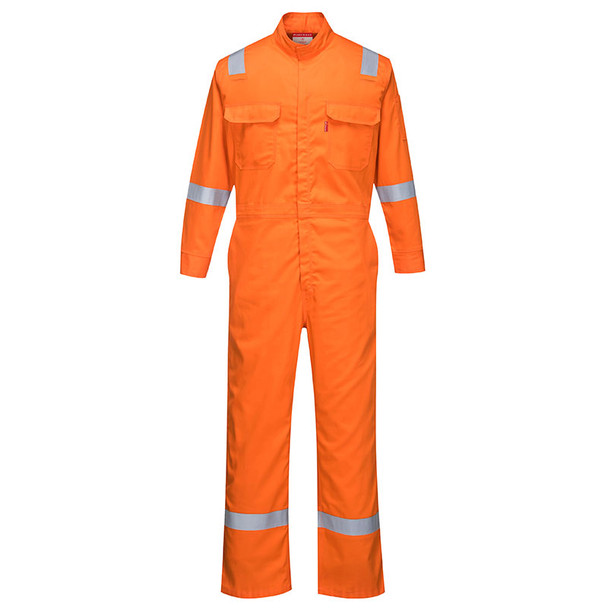
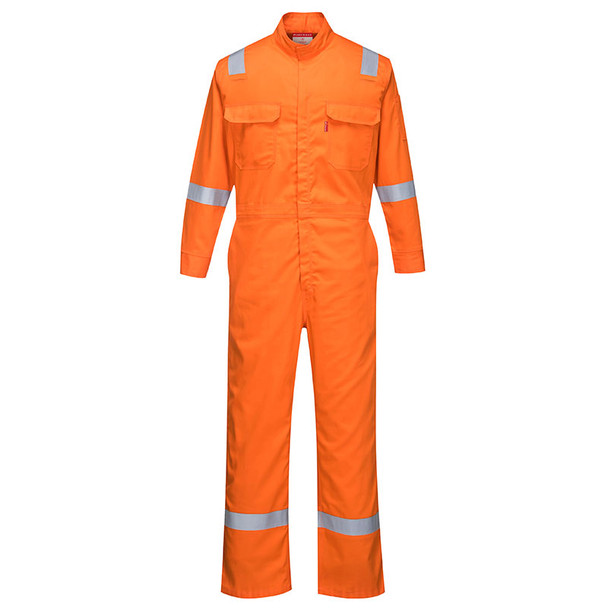
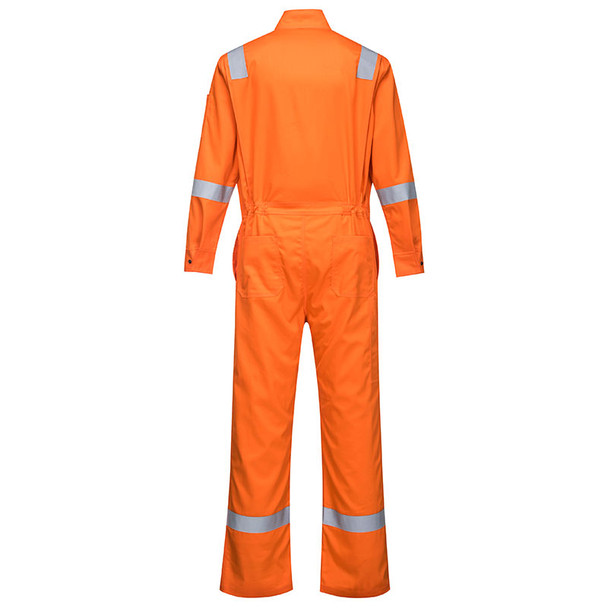
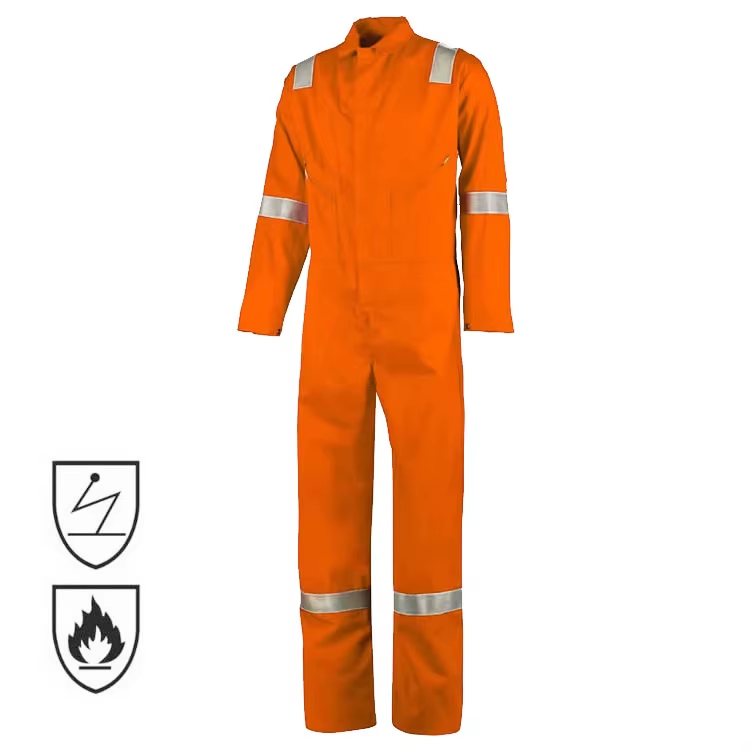
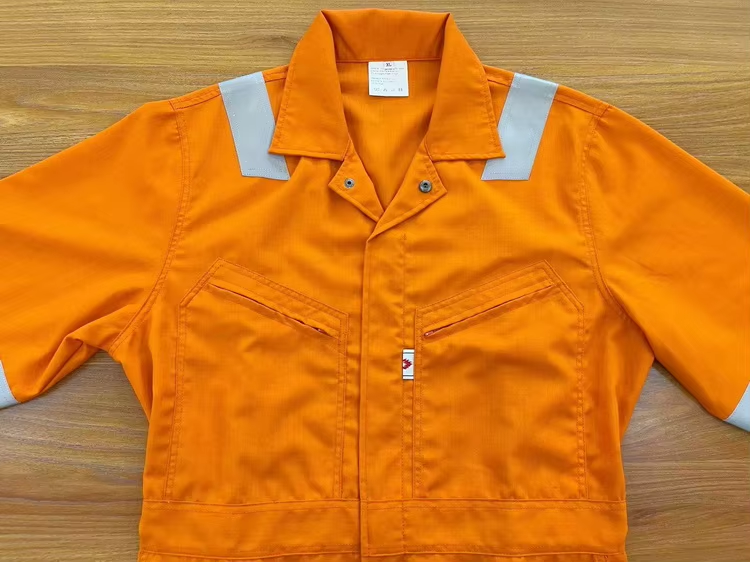
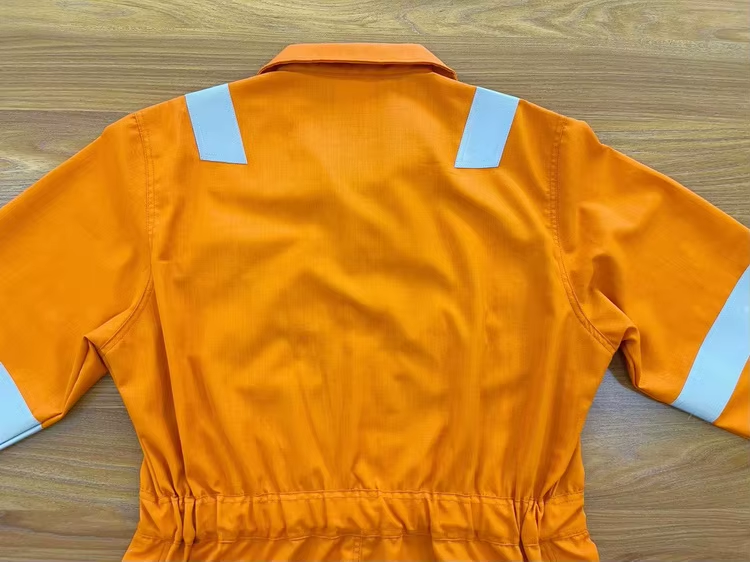
NFPA 2112 regulations 100% Cotton Reflective Flame Retardant Anti Static Coverall
NFPA 2112 regulations 100% Cotton Reflective Flame Retardant Anti Static Coverall
127.750,00 Kz
Lead time 3 March 2026
In stock
Description
| Property | Standard Test Method | Typical Compliant Value (Treated Cotton) |
|---|---|---|
| Fiber Content | Varies | 100% FR Cotton (or blend) |
| Fabric Weight | Varies | Typically 7 oz to 9 oz |
| Afterflame Time | ASTM D6413 | < 2 seconds |
| Char Length | ASTM D6413 | < 4 inches (100 mm) |
| Melting/Dripping | ASTM D6413, F2894 | None |
| Shrinkage | ASTM F2894 | < 10% |
| Predicted Body Burn | ASTM F1930 | < 50% |
| HTP (Heat Transfer) | ASTM F2700 | Spaced: > 6.0 cal/cm²; Contact: > 3.0 cal/cm² |
NFPA 2112 Regulations
The NFPA 2112 standard aims to reduce the severity of burn injuries resulting from short-duration thermal exposures or accidental flash fires, common in industries like oil & gas and chemical manufacturing. Key requirements include:
Third-Party Certification: Garments must be tested and certified by an accredited third-party organization (e.g., UL).
-
- Flame Resistance (ASTM D6413): Fabric samples must be tested (before and after 100 industrial laundering cycles) and meet the following criteria:
-
- Afterflame time of no more than 2 seconds.
- Char length of no more than 4 inches (100 mm).
-
- No melting or dripping.
- Flame Resistance (ASTM D6413): Fabric samples must be tested (before and after 100 industrial laundering cycles) and meet the following criteria:
- Heat Resistance (ASTM F2894): When exposed to 500°F (260°C) for 5 minutes, the fabric must not ignite, melt, drip, or separate, and must not shrink more than 10%.
- Manikin Testing (ASTM F1930): A complete garment (size 42-RG coverall) is tested on an instrumented manikin in a 3-second flash fire simulation. The predicted total body burn injury (second and third degree) must be 50% or less.
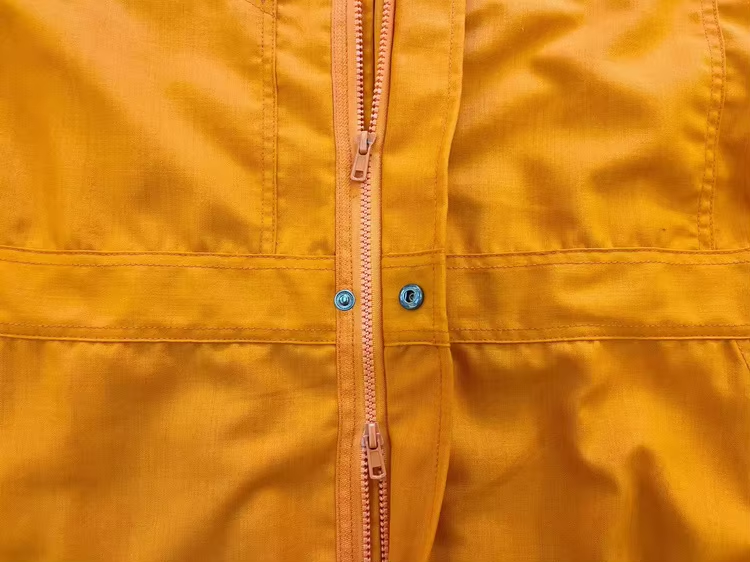
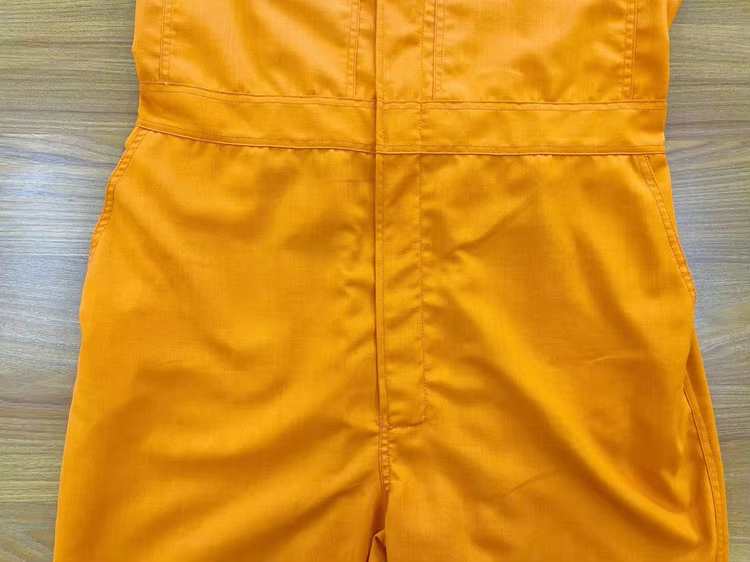
- Design Requirements: The standard specifies guidelines for garment design, including non-melting components (like threads and zippers), closure systems, and pocket design.
Additional information
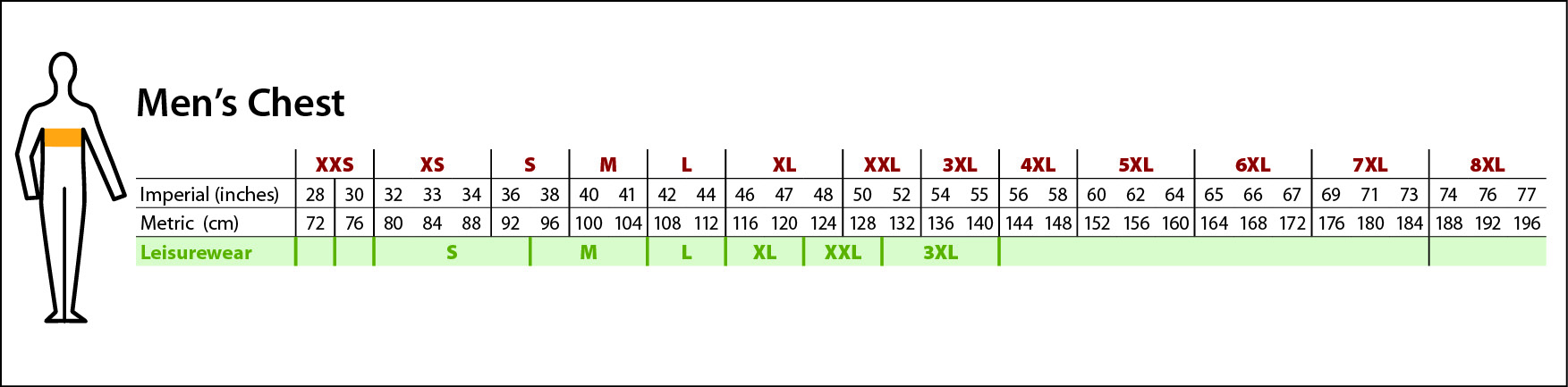
| Coverall Size | 44, 48, 50 |
|---|